

Cordless, quieter, cleaner: the latest tech in tattoo machines and ink
Wireless rotary pens have taken over the studio, and ink is under more scrutiny than ever. Here’s what’s actually changing, and what it means for your next session.
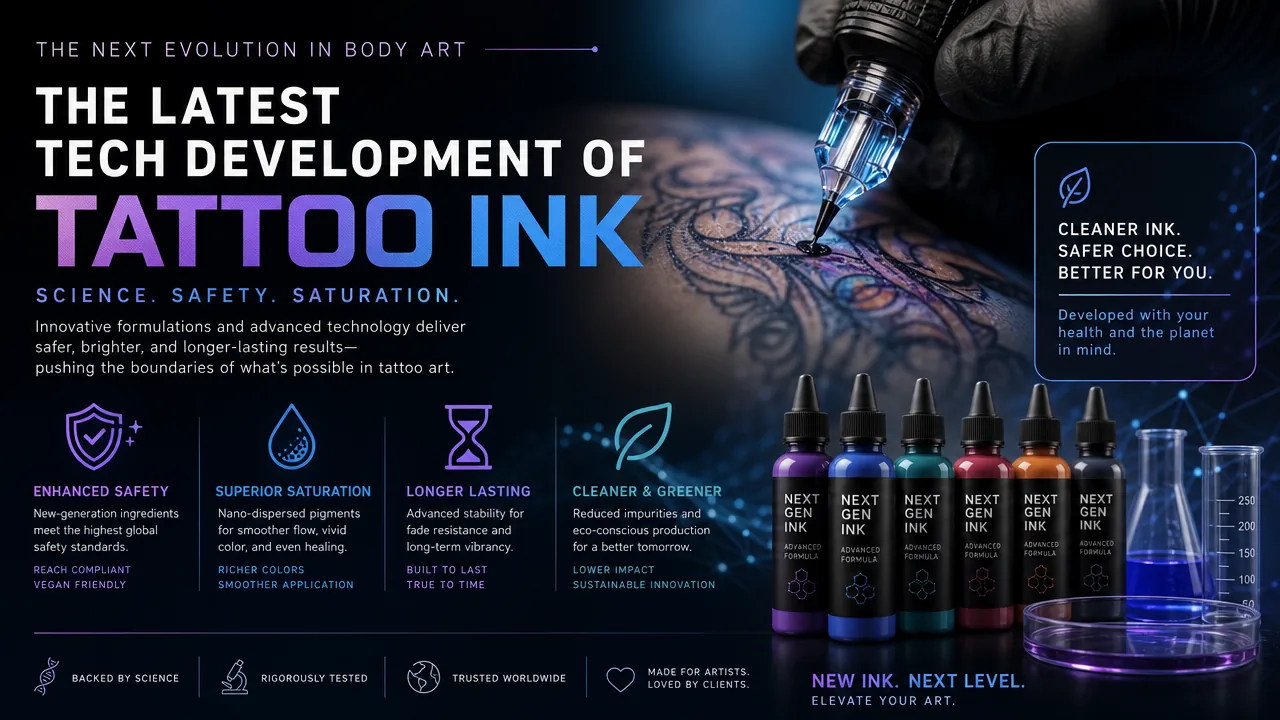
Walk into a busy shop in 2026 and you’ll notice something missing: cords. The tattoo machine has changed more in the last few years than in decades, and the ink going into your skin is facing tougher rules on both sides of the Atlantic. Here’s a clear-eyed look at what’s new.
Wireless rotary pens are the new normal
The biggest shift is the wireless rotary pen. Instead of drawing power through a clip cord or RCA cable from a separate power supply, these machines run on a built-in or attachable rechargeable lithium-ion battery. They use the same rotary motor technology as corded machines, and today’s professional models are built to keep the voltage steady as the battery drains, so performance doesn’t fade late in a session.
Battery life on most professional pens runs roughly four to eight hours per charge, with some premium models going past ten, and many ship with swappable battery packs so an artist can keep working through a long sitting. For artists, fewer cords mean a cleaner station and more freedom to move around the client.
One machine, many jobs
- Adjustable stroke: many pens let the artist change the needle’s travel on the fly, so the same machine can pull crisp lines and then switch to softer shading.
- Brushless and coreless motors: quieter, smoother and less vibration in the hand over long sessions.
- Built-in displays: small screens that show voltage and battery level at a glance.
- Cartridge systems: single-use needle cartridges that click in and out, making needle changes faster and more hygienic.
Ink is under the microscope
The machines got smarter; the ink got stricter. In the European Union, REACH restrictions that took effect in January 2022 limit thousands of hazardous substances in tattoo and permanent makeup inks, which pushed manufacturers to reformulate many colors.
In the US, tattoo inks are regulated as cosmetics, and the FDA has never approved any pigment for injection into the skin. The Modernization of Cosmetics Regulation Act (MoCRA) has expanded the agency’s authority, including facility registration and adverse event reporting, and the FDA has warned the public about specific inks found to be contaminated with microorganisms. A policy review published in August 2026 estimated that about 32% of US adults have at least one tattoo, and argued that the US still lacks enforceable limits on what ink can contain.
What’s next: experimental pigments
Researchers and manufacturers are also exploring experimental pigments, including color-changing and light-reactive formulas. They’re still early, so treat any “revolutionary ink” marketing with healthy skepticism until there’s real long-term data.
What it means for your next tattoo
- Ask what ink your artist uses. Reputable shops know their brands and keep batch information.
- Look for sealed, single-use cartridges opened in front of you.
- Red ink deserves a conversation if you have sensitive skin; it’s the color most often linked to allergic reactions.
- Remember: the machine doesn’t make the artist. The best tech in the world won’t replace skill, so pick the portfolio first and the gear second.
Sources: U.S. Food and Drug Administration; Public Health Reports (SAGE, August 2026); National Library of Medicine; industry reporting from Tommy’s Supplies, Ultimate Tattoo Supply and Southern Ink Atlanta.