AI is walking into the tattoo shop. Here’s what artists really think
Clients are showing up with machine-made designs. Artists across Europe explain why a screen render isn’t a tattoo, and where AI can actually help.
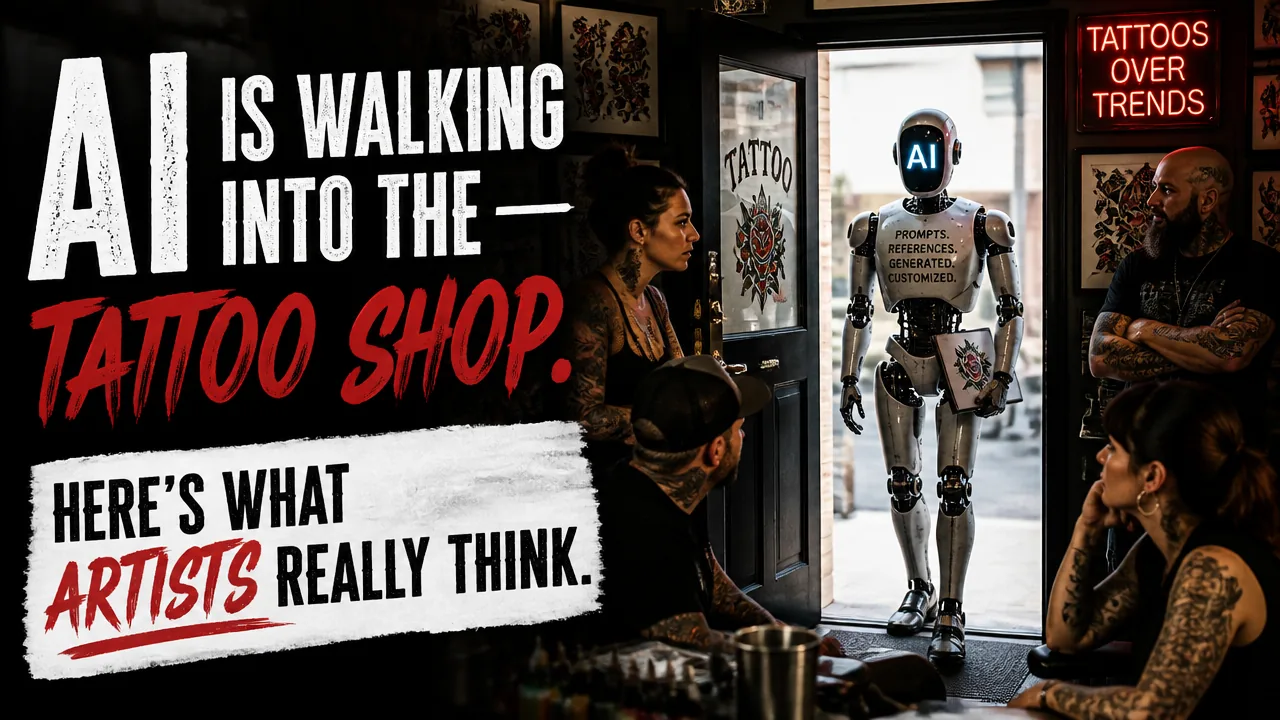
AI image generators have made their way into almost everything, and now they’re showing up at the consultation table. In a roundup of artists across Europe, one theme kept coming back: AI can spark an idea, but it can’t tattoo one.
Seven in ten clients
Hungarian artist Brigi Fuzes says roughly seven out of ten of her clients now arrive with AI-generated images as a starting point. She still redraws everything by hand. Her fine art training taught her that light, shadow and texture have to be rethought for skin, not pixels, and that ultra-detailed AI concepts often look perfect on a screen but lose their shape as a tattoo ages.
A tool, not an artist
Artist David Corden treats AI as one more tool on the bench. He has used software to build reference material and restore old family photos. What frustrates him is the assumption that any hyper-detailed piece must be machine-made, which he says underestimates real human skill.
Others want nothing to do with it. Portuguese artist Tiago Miranda of Disturbia Ink draws his horror-inspired designs from memory and instinct, filling sketchbooks instead of typing prompts. Artist Ellie Diamond is happy to see clients bring AI mock-ups, but promises something far more original once she takes over the drawing.
“There’s obviously something very innate and human about it.”
That’s how Diamond put it. Veteran artist Dan Gold isn’t worried about machines replacing him, though he does question how AI systems are trained on artists’ work without paying the people who made it.
Demand keeps climbing
The appetite for ink isn’t slowing down. Research published in 2026 found that 29% of Swedish adults aged 20 to 68 have at least one tattoo, and a 2025 study of more than 111,000 adults in France put the figure at 11.5%.
Bringing an AI design to your artist? Do it right
- Treat it as a mood board, not a finished design.
- Let the artist redraw it. They know what will hold up on skin for decades.
- Expect less fine detail. Tiny lines that look sharp on a phone blur over time.
- Pay for custom work. Original drawing is part of what you’re buying.
Source: Euro Weekly News.